Já o temos dito, mas não é demais lembrá-lo: os muçulmanos, de acordo com a doutrina do waqf, consideram que um território uma vez possessão islâmica é para sempre possessão islâmica, sendo dever de todos e de cada um dos muçulmanos tudo fazer para o recuperar.
A doutrina é antiga e actual. Primeiro estão concentrados em Israel, espinho atravessado na orgulhosa garganta da ummá; depois reclamarão a Península Ibérica, o Al-Andalus, cenário de uma mitológica prosperidade e superioridade cultural e civilizacional islâmicas, estranhamente jamais repetidas e sem nada que se lhe compare passados 600 anos.
Quem duvida, oiça o que os próprios muçulmanos dizem:
Mostrar mensagens com a etiqueta Al-Andalus. Mostrar todas as mensagens
Mostrar mensagens com a etiqueta Al-Andalus. Mostrar todas as mensagens
10.6.12


21.2.11
Santiago do Cacém: Igreja matriz em destaque em França
Ou muito me engano (espero bem que sim) ou não tardará muito a que alguma organização de defesa dos emigrantes ou das minorias religiosas não-cristãs, ou alguma organização de historiadores progressistas em nome da memória histórica venha a exigir a alteração do brasão da cidade de Santiago do Cacém, por islamófoba, por incitamento à violência racial (sim, racial) e sabe Deus mais o quê, que a imaginação desta gente vai muito além do que o meu pessimismo consegue prever:


Amplify’d from www.agencia.ecclesia.pt

See this Amp at http://amplify.com/u/br617
23.12.10
Espanha: súmula do avanço do islão e da sharia
Amplify’d from www.hudson-ny.org
In September 2010, for example, a discotheque in southern Spain was forced to change its name and architectural design after Islamists threatened to initiate "a great war between Spain and the people of Islam" if it did not. La Meca was a popular discotheque in the southern Spanish resort town of Águilas (Murcia) in the 1980s and 1990s. After being closed for more than a decade, the club reopened in August 2010 under new management, but using the original name, La Meca. The mega-nightclub, which has been visited by more than 100,000 patrons since its reopening, features a large turquoise-colored mosque-style dome, a minaret-like tower, as well as traditional Arabic architecture common in southern Spain.
But soon after its reopening, Muslims began to complain that the nightclub is offensive and insulting to their religion; a group of Muslim radicals posted a video on the Internet calling for a boycott of Spanish goods and jihad against those who "blaspheme the name of Allah." Spain's intelligence agency, the Centro Nacional de Inteligencia (CNI), warned La Meca's owners that the discotheque was being directly targeted by Islamic extremists.
In mid-September, the nightclub owners held a hastily-arranged press conference during which they – under the watchful supervision of local Muslim leaders – announced that the venue's name would be changed to La Isla (the island) "to avoid further problems and to ensure that patrons keep coming." They also confirmed plans to modify controversial features of the club's architecture, namely a minaret-like tower that will be converted into a lighthouse-like tower.
Other Islam-related controversies abound in Spain. In December 2010, for example, Spanish police raided an apartment in the northern city of Logroño to free a 25-year-old Pakistani woman who was forced to marry her cousin and was then held captive by her family and sexually assaulted for more than a month. She was freed after two passersby found a note the woman had dropped from the window of an eighth floor apartment where she was being held. Police arrested ten Pakistanis, including the woman's husband as well as her parents, on charges of kidnapping and sexual assault.
In an interview with the Madrid-based newspaper, El País, Huma Jamshed, President of the Association of Pakistani Women in Spain, says there are many such cases in Spain, although most of them do not end up with arrests. "It is difficult to understand. You have to know Pakistani culture, which is completely different from Spanish culture. This is a matter of interests. The families marry off their children to relatives in Pakistan to get the [immigration] papers here, and this is a guarantee of a future for them. Marriages between cousins are normal in Pakistan and women do not feel obliged. The problems begin when they come to Spain and are educated; they begin to work and know their rights, because then it becomes an abuse and they feel forced."
Meanwhile, the Catalan town of Lleida, where 29,000 Muslims make up more than 20 percent of the town's population, became the first municipality in Spain to ban the burqa head covering in all public spaces. Women found violating the ban, which entered into effect on December 9, will be fined up to €600 ($750). One day earlier, the Catalonian Supreme Court turned down an appeal from Watani, a local Muslim association, which had argued that the ban constitutes religious discrimination.
Also in December, an imam in Tarragona, a city in northeastern Spain, was sentenced to one year in prison for forcing a 31-year-old Moroccan woman to wear a hijab head covering. The local prosecutor had asked the judge to jail the imam and three others for five years for harassment" after the imam had threatened to burn down the woman's house for being an "infidel," but the Socialist mayor tried to get the case dismissed to prevent "a social conflict."
In November 2010, the Spanish cities of Ceuta and Melilla, two enclaves in northern Africa, officially recognized the Muslim holiday of Eid al-Adha, or the Festival of Sacrifice, as a public holiday. By doing so, Ceuta and Melilla became the first Spanish municipalities officially to mark an Islamic holiday since Spain was liberated from Muslim captivity in 1492.
More than 10,000 lambs were slaughtered in conformity with Sharia rituals during the one-day festival on November 17. According to local media reports, many of the animals were imported illegally from Morocco because Muslim immigrants prefer to sacrifice lambs with long tails, lacking on lambs grown on the Iberian Peninsula.
Meanwhile, jihadists are now calling for a "crusade" to recover Ceuta and Melilla for Islam. They say they were provoked by an August 2010 border crisis between Spain and Morocco and that involves the two cities.
In October 2010, the Islamic Association of Málaga, in southern Spain, demanded that Television Española (TVE), the state-owned national public television broadcaster, stop showing a Spanish-language television series called El Clon. In an angry letter addressed to TVE Director General Santiago González, the authors express their "most energetic revulsion" against a show they describe as "not only anti-Muslim, but also attacking the basic principles of coexistence and integration guaranteed by all democratic societies." The authors accuse TVE of violating the Spanish Constitution for airing a program that criticizes certain aspects of Islam, such as forced marriages and the lack of women's rights in Muslim countries.
In September 2010, radical Muslims threatened to attack the Barcelona metro system on the day the city celebrates its annual September 24 holiday, Festes de la Mercè., which had its origins in a medieval Roman Catholic religious order established to liberate Christians from Muslim captivity at a time when the Iberian Peninsula was under Islamic occupation (711-1492).
In April 2010, a 16-year-old schoolgirl was banned from a school in Madrid after refusing to remove her hijab, a face covering, in violation of the school dress code.
In December 2009, nine Salafists in Catalonia kidnapped a woman, tried her for adultery based on Sharia law, and condemned her to death. The woman escaped and fled to a local police station just before she was to be executed by the Islamists.
In November 2009, a Muslim lawyer was ejected from Spain's high court in Madrid, where she was defending a client, because the lawyer refused to remove her headscarf.
In April 2009, Spain marked the 400th anniversary of King Philip III's expulsion of the Moriscos -- the descendants of the Muslim population who converted to Christianity under threat of exile in 1502 -- from Spain in 1609. The Spanish Socialist Party called on Spain to apologize to the Muslim world for the expulsion, which Muslims claim was the world's first genocide. Muslim leaders say Spain could right the wrong by offering Spanish citizenship to the Muslim descendants of the Moriscos, as an "apology and acknowledgement of mistakes" made during the Spanish Inquisition.
In February 2009, the Islamic Commission of Spain, the group that represents Spain's Muslims, complained to the Spanish government that there are only 11 cemeteries for the 1.5 million Muslims in Spain. The group says the lack of burial plots in Spain for Muslims makes it impossible for them to bury their dead according to Sharia law. Muslim leaders also called on the Spanish government to provide mosques for Muslim worshippers.
In October 2007, Amr Moussa, the Egyptian Secretary-General of the Arab League, asked the Spanish government to allow Muslims to worship in the cathedral of Córdoba, which had been a mosque during the medieval Islamic kingdom of Al-Andalus. Muslims now hope to recreate the ancient city of Córdoba, once the heart of Al-Andalus, as a pilgrimage site for Muslims throughout Europe. Funds for the project to turn "Córdoba into the Mecca of the West" are being sought from the governments of the United Arab Emirates and Kuwait, and Muslim organizations in Morocco and Egypt.
In Granada, a city in southern Spain that was the last Muslim stronghold of Al-Andalus to capitulate to the Roman Catholic kings in 1492, there are now parallel societies; some Muslims want traditional Sharia law to be applied there instead of Spanish law. They are also demanding Muslim education and special Muslim schools for their children. They also want an equal share in the money made with ticket sales for the fabled Alhambra palace, which they regard as part of the cultural heritage of their Muslim ancestors.
See this Amp at http://amplify.com/u/j9m0
18.10.10
Nas Ilhas Baleares o número de mesquitas quintuplicou em 5 anos
Este aumento de mesquitas deve-se à generosa política de imigração dos estados europeus. Tratam-se de mesquitas construídas para atender às necessidades de pessoas estrangeiras.
Pergunta: quantas igrejas foram construídas em países muçulmanos no mesmo intervalo para servir a população nativa de religião cristã, por exemplo no Egipto, na Síria, no Iraque?
Pergunta: quantas igrejas foram construídas em países muçulmanos no mesmo intervalo para servir a população nativa de religião cristã, por exemplo no Egipto, na Síria, no Iraque?
Amplify’d from tea-and-politics.blogspot.com
The number of mosques has increased fivefold in the Balearic Islands in recent years. In 2005 there were only six mosques in the islands and is now accounted for 30, as shows the registration of religious communities in the Ministry of Justice. The most important municipalities of the Balearic Islands have already a temple to practice Islam and Islamic groups now want also to have cemeteries to bury their dead by Muslim rites. For this reason, they plan to apply for land to the municipalities.
The real expansion of mosques has occurred since 2006, being the year 2008 when opened more Islamic centers were opened in the islands, especially in Mallorca.
Source.
Read more at tea-and-politics.blogspot.com
See this Amp at http://amplify.com/u/d35e
3.10.10
De arte Lusitana

Sem dúvida a função primacial [da vasta basílica myrtilense] foi a de lugar de doutrina e culto cristão, assistida por um corpo eclesial hierarquizado e bastante completo formado por presbíteros de que se conhecem os nomes de alguns; (Satírius, Romanus, Simplícius, Britto, Afranius), que presidiram à celebração de ofícios (a missa), administração dos sacramentos, formação dos catecúmenos etc, servida por uma pompa litúrgica especialmente rica no período visigótico. Queremos realçar aqui a função do canto que desempenhou um papel importante no convite à piedade e na criação de um clima emocional propício à exaltação do divino e ao fortalecimento da fé, nestas comunidades primitivas.
Sobre o exercício do canto na igreja myrtilense informa-nos o epitáfio (séc.VI) do já referido Andreas designado no texto "princeps cantorum", isto é o primeiro cantor [referência única em toda a península ibérica], e como era habitual deve ter presidido ao côro [local preferido para as inumações] e a uma "Schola" de cantores; e quem sabe se não exerceu a função de escola laica ministrando nesses tempos difíceis os rudimentos de leitura e escrita assumindo assim uma função social, como era habitual na alta Idade Média.
Além dos presbíteros e chantres, (cléricos de ordens maiores), a igreja de Myrtilis foi também servida pelos chamados menoristas. Entre estes conhecem-se o leitor Tyberius que faria a leitura das epístolas e um ostiário (porteiro) chamado Exupérius que teria por função a segurança e a limpeza da igreja.»
A Basílica funerária de Myrtilis extra-muros tem ainda a oferecer aos seus visitantes a mais antiga lápide de um judeu na península ibérica, com um candelabro (menorah), a exemplificar a componente judaica latinizada da sociedade myrtilense, próxima à cristã, bem como algumas epígrafes gregas, aparentemente de falantes com representação eclesiástica própria, referindo Êutiques, por coincidência ou não o nome do proponente do monofisismo. Esta heresia cristã de tipo unitariano, segundo Cláudio Torres, teria predisposto Mértola, tal como outras urbes mediterrânicas onde majoravam o arianismo e o monotelismo, à penetração do islão nos séculos VII e VIII.
«Antes da sacralização do local, ocorrida em meados do século V, essa zona foi ocupada por uma necrópole de incineração, que deu lugar a um cemitério de inumação a partir de finais do século I.» Quanto à tipologia da basílica e suas sepulturas (com tesselas), é de salientar a influência do norte de África, Proconsular, com o qual a cidade teria fortes ligações comerciais através do rio Guadiana. A orientação dos túmulos paleocristãos, com a cabeça a poente e o corpo deitado de costas de forma a que este possa olhar o Sol nascente no dia do Juízo Final, difere da dos islâmicos, com o lado direito virado a Meca.
«Embora seja identificável, do ponto de vista arqueológico, um estrato de destruição perfeitamente nítido (com abundantes vestígios do telhado [tégula e imbrices] sobre o pavimento) é possível que, logo no início do período islâmico, o local tenha servido como zona funerária. Algumas das sepulturas islâmicas (localizadas no mesmo nível arqueológico das paleocristãs) apresentam com estas fortes semelhanças do ponto de vista construtivo. Outras assentavam sobre o derruído telhado da basílica, edifício que teria entretanto sido abandonado», embora a zona seguisse sendo uma importante área mortuária. Há ainda elementos decorativos de origem oriental (aves do paraíso com cauda de pavão num campo de ramos de roseiras em botão) presentes nas lápides paleocristãs e mais tarde na cerâmica verde e manganês do Al-Andalus.
Mas característica da Lusitânia teria sido, entre outros pormenores epigráficos, a representação de arcos sobre colunas. Eis a transcrição do Epitáfio de Andreas:
«arco duplo (em ferradura) assente sobre duas colunas torsas com capitéis decorados [de tipo corintizante]
(dentro do arco)
alfa crismon ómega
| ANDREAS FAMVLVS DEI PRINCEPS CAN- TORUM SACROSAN CTE A[E]CLISIAE MER- TILLIA[N]E VIXIT ANNOS XXXVI REQVIEVIT IN PA- CE SUB D(IE) TERTEO KAL(ENDAS) APRILES AERA ∂LX TRI- SIS | André, [familiar-]servidor de Deus, primeiro [principal] cantor da sacrossanta Igreja Mertiliana, viveu 36 anos, descansou em paz no terceiro dia das calendas de Abril da era de 560 e 3 [era de César] (o que corresponde no nosso calendário ao dia 30 de Março do ano de 525) |
CH[...]
Chama-se a atenção para a expressão sacrossancta aeclisia mertilliana que refere o conjunto da comunidade cristã de Mértola, e para a decoração de arcos sobre capitéis decorados por três ordens de folhas de acanto, sustentadas por colunas torsas. As duas cruzes com alfa e ómega, a indicar que em Cristo está o princípio e o fim, iniciam e fecham o texto funerário: uma linha abaixo podem ver-se as letras CH[...], certamente início de uma frase de tipo propiciatório como por exemplo ― Cristo esteja contigo!.»
in Museu de Mértola - Basílica Paleocristã, coord. (catálogo e exposição) Cláudio Torres, ed. Campo Arqueológico de Mértola, 1993

2.10.10
Muçulmanos de Ceuta querem espaço próprio em templo multi-religioso
Sem conhecer bem o caso não posso fazer comentários muito peremptórios, mas esta notícia parece ser mais uma instância de um processo frequente: os muçulmanos começam por exigir espaços para rezar, o que leva os governos laicos, sempre prontos a renunciar à sua herança cristã e ao que ela implica, a tranformarem as capelanias dos hospitais e das escolas em "espaços multi-religiosos"; o passo seguinte é este: dadas as especificidades do culto islâmico, os muçulmanos, não satisfeitos com a remoção de crucifixos e imagens de santos, passam para a exigência de um espaço isolado das restantes religiões. O passo seguinte acabará por ser a exigência de uma mesquita propriamente dita.
La Unión de Comunidades Islámicas de Ceuta (UCIDCE) ha pedido al Instituto Nacional de Gestión Sanitaria (INGESA), organismo que gestiona la sanidad en Ceuta y en Melilla, la separación del único lugar de culto ubicado en el Hospital Universitario entre fieles musulmanes y el resto de religiones.
El presidente de la UCIDCE, Laarbi Maateis, ha remitido un escrito para solicitar un lugar para los rezos de la comunidad en el clínico, independientemente del único habilitado actualmente, donde se ofician los rezos.
Laarbi Mateis ha indicado que la petición se basa en que existe una serie de diferencias durante el culto, que aconsejan la separación de los musulmanes “ya que para el culto debe estar cubierto el suelo por alfombras y esterillas, entre otros”.
El presidente de la Unión de Comunidades Islámicas de Ceuta asegura que ha seguido el modelo presente en los aeropuertos de París, Londres y Canadá para solicitar la división del lugar de culto en el Hospital Universitario de Ceuta.
Read more at www.minutodigital.com
See this Amp at http://amplify.com/u/blkq
23.9.10
Pipes em entrevista ao El Mundo
Excelente entrevista. Pipes postula a distinção entre um islão moderado e um extremismo islamista, fortemente contestada por outros estudiosos ocidentais do islão. A ser verdadeira a existência desse islão moderado, seria necessário que se manifestasse mais vezes e de modo mais contundente, nomeadamente opondo-se ao islão ortodoxo, o imperialista, beligerante, segregacionista, misógino, esclavagista, etc. Destaque para a opinião de Pipes sobre a construção de uma mesquita na vizinhança do Ground Zero:
«P. ¿Qué opina de la construcción de la Mezquita cerca de la zona cero en Nueva York?A ler na íntegra:
R. No me importa mucho aunque a fin de cuentas estoy en contra. No es un tema prioritario sino simbólico. Occidente sigue centrándose en los símbolos como la vestimenta islámica en las escuelas de Francia, los minaretes en Suiza o las caricaturas en Dinamarca. El verdadero asunto es si aceptamos la ley islámica, la poligamia, la supremacía del Islam, que nos prohíban expresarnos por miedo a las represalias.»
Amplify’d from www.minutodigital.com
Interesante entrevista concedida por Daniel Pipes a Sal Emergui y publicada en España por ‘El Mundo’. El analista norteamericano y director del Middle East Forum, hablan sin tapujos del Islam y afirma que Zapatero está dando pasos que los islamistas aprueban y a largo plazo podría acercar el sueño de Al Andalus
Pregunta. ¿Habla de miedo al islamismo?
Respuesta. Hay miedo a que los islamistas se ofendan y se enfaden con nosotros y lo que pueden hacer. Sólo tiene que ver que ha pasado en mi país con los coranes. Creo que quemar un libro es totalmente incorrecto y no muy inteligente pero en Estados Unidos es un acto legal. Sin embargo, aparece Obama y dice: ‘Usted no puede quemar este libro porque tengo miedo de las consecuencias’. Actúa reforzando la Sharia (Ley Islámica) al decir, ‘no debes quemarlo porque va en contra de la Sharia’.
20.9.10
População de Badalona manisfesta-se contra a islamização
A Europa está a despertar para a ameaça islâmica.
Amplify’d from www.minutodigital.com
El presidente de Plataforma per Catalunya (PxC) y candidato a la presidencia de la Generalitat de Catalunya, Josep Anglada, ha asistido a la concentración convocada por la delegación de PxC en la ciudad de Badalona con motivo de la protesta por la cesión del antiguo edificio de bomberos a la comunidad islámica para celebrar el ramadán, y donde el Ayuntamiento tiene previsto ceder el espacio a los musulmanes que rezan de manera completamente ilegal en la plaza Camarón de la Isla, donde todos los viernes se congregan cerca de 500 personas alterando la convivencia del barrio y los espacios públicos.

Entre los asistentes, ante numerosísimos medios de comunicación, candidatos de PxC a las municipales y a las autonómicas y la cúpula del partido con August Armengol (Vicepresidente de PxC), Miriam Muñoz, Pablo Barranco (Sec. Gral de PxC), Eduard Pallerola, Carles Francisud, José Manuel Carrasco, Ignacio Mulleras, David Parada y un largo etcétera al que se sumaron diversos líderes vecinales de Badalona que apoyaron el acto, en representación de numerosos vecinos atosigados por la presión musulmana que se vive en la localidad, y la presidenta de España y Libertad, Yolanda Morín.
Anglada ha declarado “su oposición frontal, tanto a la cesión del antiguo edificio, como permitir la gran concentración de gente en la plaza Camarón de la Isla”, y ha pedido al consistorio que “no permita saltarse la ley y no querer entender que Badalona necesita de una actuación rápida y contundente para luchar contra la degradación de los barrios y el aumento de la delincuencia en la ciudad”.

Tras una brillante introducción por parte del alcaldable de PxC por Badalona, Carles Francisoud, y ante unas 500 personas, el líder identitario ha desenmascarado a los que ahora le copian refiriéndose principalmente al PP y García Albiol.
Anglada ha empezado su discurso diciendo que “no han podido pararnos”.Las triquiñuelas del Ayuntamiento local, el silencio de los medios de comunicación oficiales y la presión mediática de nada han servido ante nuestra firme voluntad de decir alto y claro que no queremos ninguna mezquita en Badalona, ni ninguna mezquita en toda Cataluña”. El líder identitario ha seguido diciendo que “no hay lugar tampoco, ni en Badalona ni en Catalunya, para las mujeres tapadas con velos, ni para los imanes radicales, ni para los predicadores de la guerra santa, ni para los que quieren utilizar nuestra democracia y nuestra libertad para destruirla”, y ha afirmado que “la islamización de Europa no es hoy una amenaza para el futuro, sino una realidad, una dramática realidad que se extiende día a día como la larva de un volcán que nadie parece saber cómo detener”.
Anglada también ha querido recordar que “la primera regularización masiva que se hizo en España fue cuando estaba gobernado el PP, siendo el Sr.Rajoy ministro del interior, y la Sra. Alicia Sánchez-Camacho directora general”.

Anglada ha seguido diciendo que “el Sr. García Albiol debería acordarse de que en el año 2002 su partido nada dijo contra la mezquita de Permiá de Mar”. El Sr. Albiol, ha dicho Anglada, debería saber que “en la Comunidad Valenciana y en Madrid –ambas gobernados por los populares-, se autoriza la construcción de mezquitas sin trabas ni problemas. Y debería saber también el Sr. Albiol y la Sra. Alicia Sánchez-Camacho que su partido ha pedido el ingreso de Turquía en la Unión Europea, lo que supondrá que 70 millones de musulmanes puedan instalarse legalmente en cualquier país europeo incluido España”, ha sentenciado.
Los vecinos, provistos de vistosas pancartas antimezquita, no cesaban de corear “No a la mezquita, Anglada president!”, en un ambiente entre festivo y reivindicativo.
Anglada ha acabado el acto pidiendo el apoyo de la ciudadanía y concretamente de los badaloneses el próximo 28 de noviembre para representar al pueblo con claridad y con la contundencia que se necesita actualmente: “¡Somos necesarios!” ha finalizado Anglada.


See this Amp at http://amplify.com/u/atzw
19.9.10
Alguns aspectos da vida dos cristãos e judeus sob domínio islâmico
Este é um assunto que sobre o qual convém falar, porque o islão está a expandir-se no mundo ocidental e porque, basicamente, no que diz respeito ao modo de encarar os não-muçulmanos, não mudou.
Serve também para esclarecer os ingénuos sobre uma quimérica convivência pacífica entre muçulmanos, cristão e judeus sob domínio islâmico na história das interacções dos fiéis destas três religiões e também para se perceber o que significa exactamente a «tolerância islâmica».
A tax (the kharaj) was levied on the lands left to the indigenous dhimmis. This tax symbolized the Arabization of the land of the dhimmis, that is, its addition to the patrimony of the Arab-Islamic community. In the early period of colonization, lands given in fief were exonerated from the kharaj. Each male dhimmi, with the theoretical exceptions of the aged, invalids, and slaves, had to pay a poll tax (the jizya), which symbolized the subjection and humiliation of the vanquished. The dhimmis also paid double the taxes of the Muslims. In addition, ransoms (avanias) were frequently extorted from the local Jewish and Christian communities under threat of collective sanctions, including torture and death.
Politico-economic Discrimination
It was forbidden for dhimmis on pain of death:Excerto de The Myth of Islamic Tolerance, Prometheus Books, New Your, 2005, How Islamic Law treats non-Muslims, Edição: Robert Spencer; Dhimmi Peoples, Bat Ye'or. pp.115-117.
The dhimmis were obliged:
- to carry or possess weapons;
- to raise a hand against a Muslim, even against an aggressor or unjustly determined to kill them;
- to ally themselves with the enemies of the Arabs;
- to criticize Islam, the Prophet, or the angels;
- to convert to any religion other than Islam, and having converted to Islam to revert to their original religion;
- to be linked by marriage or concubinage to a Muslim woman;
- to hold a position giving them authority over a Muslim.
It was forbidden for the dhimmis:
- to live separated from Muslims, in special quarters of a town, the gates of which were closed every evening, or, as in Yemen, outside the limits of towns inhabited by Muslims;
- to have shorter houses than those of Muslims;
- to practice their religion secretly and in silence;
- to bury their dead hastily;
- to refrain from showing in public religious objects, such as crosses, banners, or sacred texts;
- to distinguish themselves from Muslims by their exterior aspect; to wear clothes distinguished not only by shape (length, style of sleeves, etc.) but also by specific colors assigned to each group of dhimmis, i.e., for Jews, Christians, and Samaritans;
- to have different type of tombs from those of Muslims.
Furthermore, all elements of their exterior appearance were intended to:
- to go near mosques or to enter certain venerated towns, which would thereby be polluted;
- to have headdresses, belts, shoes, ornate saddles, or saddles similar to those of Muslims.
The dhimmis were obliged:
- emphasize their humble and abject status. They were forbidden to ride horses or camels, since these animals were considered too noble for them. Donkeys were permitted, but they could only ride them outside towns, and they had to dismount on sight of a Muslim.
- In certain periods they were forced to wear distinctive badges in the public baths, and in certain regions they were even forbidden to enter them at all.
- to make haste in the streets, always passing to the left (impure) side of a Muslim, who was advised to push them to the wall;
- to walk humbly with lowered eyes;
- to accept insults without replying;
- to remain standing in a humble and respectful attitude in the presence of a Muslim;
- to leave Muslims the best places;
- never to speak to Muslims except to reply.
- Any litigation between a dhimmi and a Muslim was brought before an Islamic tribunal, where the dhimmi's testimony was unacceptable.
5.9.10
«El Cid», contra a propaganda muçulmana
Baron Bodissey, do Gates of Vienna, decidiu divulgar um filme cuja acção decorre na Península Ibérica ocupada pelos mouros. A iniciativa visa contrariar a crença inculcada na consciência histórica ocidental através de persistente propaganda progressista, de inspiração anticristã, segundo a qual a Península teria vivido um período de singular convivência entre cristãos, judeus e muçulmanos durante o domínio destes. Embora esta crença tenha algum fundamento, está bem longe de poder caracterizar os mais de setecentos anos de ocupação, como se pretende fazer crer. Para nós, portugueses, este assunto tem uma relevância particular, uma vez que os muçulmanos não escondem o seu desejo de conquistar novamente a Península, a qual parece ocupar lugar mítico na consciência comum islâmica, espécie de protótipo do estado islâmico por excelência, nunca antes alcançado e nunca mais repetido. Embora o filme seja, por vezes, pouco subtil, à boa maneira de Hollywood, não deixa de ser um instrumento válido na tentativa de levar os nosso concidadãos a rever por si próprios a história da nossa civilização, do nosso país, da nossa religião, para além das cortinas de fumo da narrativa progressista.
Amplify’d from gatesofvienna.blogspot.com
It was no accident of public relations that “Córdoba Initiative” was chosen as the title of the Ground Zero mosque project. The city of Córdoba was the capital of al-Andalus, the Umayyad Caliphate in Iberia, and the famous Córdoba Mosque was built atop the rubble of a destroyed church. For the last several decades Islam has been expanding into the West using cunning and deceit facilitated by the treason of our governing elites, who have sold their own countries to the Islamic invaders. This peaceful conquest is a historical anomaly, however — from its inception until its long decline began in 1683, Islam expanded solely through violence. Wherever Islam expanded violently, it built mosques at the sites of its victories. The minarets rose over the rubble of destroyed churches, synagogues, and temples to stand as symbols of Islam’s conquest of the kuffar. The Córdoba Mosque was an architectural announcement of the Moorish triumph over Christian Iberia. The Córdoba Initiative thus provides an obvious historical analogy to the Islamic victory on September 11th, 2001, at Ground Zero. The significance of the name and place will not be lost on any educated Muslim who hears about the project. As a counterweight to Imam Rauf’s propaganda coup, The El Cid Project aims to establish a different narrative around the hallowed ground in Lower Manhattan. The Castilian nobleman Rodrigo Díaz de Vivar, popularly known as “El Cid”, led a successful campaign in the 11th century against the Moors. He is a hero of the Reconquista, the centuries-long Christian struggle to drive the Muslims out of Iberia. In 1961 El Cid was made into a movie starring Charlton Heston and Sophia Loren. It’s a gorgeous production — they don’t make movies like that anymore. Just imagine: Christian soldiers marching proudly into battle under the banner of the Cross — in a Hollywood movie! What a difference fifty years makes. The El Cid Project proposes screening the movie near the Ground Zero site. We’ll do our part by showing a YouTube version of it here in seventeen installments (subtitled in Portuguese, no less).
The video above is the first of seventeen parts. We’ll post an installment every weekday, with the final part on September 10th.Read more at gatesofvienna.blogspot.com
See this Amp at http://amplify.com/u/9rmj
24.8.10
CLXXXIII. Esta é dun miragre que mostrou Santa Maria en Faaron quand' era de mouros.
Pesar á Santa Maria de quen por desonrra faz
dela mal a ssa omagen, e caomia-llo assaz.
Desto direi un miragre que fezo en Faaron
a Virgen Santa Maria en tenpo d' Aben Mafon,
que o reino do Algarve ti' aquela sazon
a guisa d' om' esforçado, quer en guerra, quer en paz.
Pesar á Santa Maria de quen por desonrra faz...
En aquel castel' avia omagen, com' apres' ei
da Virgen mui groriosa, feita como vos direi
de pedra ben fegurada, e, com' eu de cert' achei,
na riba do mar estava escontra ele de faz.
Pesar á Santa Maria de quen por desonrra faz...
Ben do tempo dos crischãos a sabian y estar,
e porende os cativos a yan sempr' aorar,
e Santa Mari' a vila de Faaron nomar
por aquesta razon foron. Mas o poboo malvaz
Pesar á Santa Maria de quen por desonrra faz...

Dos mouros que y avia ouveron gran pesar en,
e eno mar a deitaron sannudos con gran desden;
mas gran miragre sobr' esto mostrou a Virgen que ten
o mund' en seu mandamento, a que soberva despraz.
Pesar á Santa Maria de quen por desonrra faz...
Ca fez que niun pescado nunca poderon prender
enquant' aquela omagen no mar leixaron jazer.
Os mouros, pois viron esto, fórona dali erger
e posérona no muro ontr' as amas en az.
Pesar á Santa Maria de quen por desonrra faz...
Des i tan muito pescado ouveron des enton y,
que nunca tant' y ouveran, per com' a mouros oý
dizer e aos crischãos que o contaron a mi;
poren loemos a Virgen en que tanto de ben jaz.
Pesar á Santa Maria de quen por desonrra faz...

Santa Maria de Ossónoba, rogai por nós.
21.7.10
Mesquita fechada e imã preso em Ibiza
Ao que parece, o imã aplicava castigos corporais às crianças: batia com uma vara na cabeça, mãos e costas.
Alguns fiéis, que enviavam os filhos para a escola em funcionamento na mesquita, não parecem preocupados com os alegados maus-tratos às crianças; afinal de contas, os miúdos iam à mesquita para aprender a religião muçulmana e a cultura árabe.
Via Women Against Shariah.
DUBAI (Al Arabiya) Amplify’d from http://www.alarabiya.net/articles/2010/07/20/114359.html Spanish authorities closed a mosque in the island of Ibiza and arrested its imam after charging him with beating several Muslim students in the mosque school, local press reported. The Spanish Civil Guard closed the main mosque in the town of Sant Antoni, located in the Mediterranean island of Ibiza, and arrested its imam Kharin , who is of Moroccan origins, on charges of mistreating and beating 12 students at the School of Arab Culture, the Spanish language newspaper Diario de Ibiza reported. Sant Antoni local police started conducting investigations about the imam after receiving several complaints from parents who reported that their children were being beaten with a stick on their heads, arms, and backs while taking their Arab culture lessons in the mosque’s school. Muslims on the island were taken by surprise although most of them declined to talk to the press amid reports that the police cautioned them against doing so in order not to tarnish Spain’s image as far as liberties and freedom of faith are concerned. Those who agreed to speak to the press expressed their disappointment about the closure of the mosque where they take their children in order to learn the Quran and Arab history and culture. Moroccan-born Anissa, who wears the Islamic headscarf, enrolled her four-year old girl in the school and is one of the very few Muslims who agreed to speak to the press. “I send my little girl to the mosque to learn about her religion and culture,” she told the Diario. “I also went there to pray and learn more about Islam. Now, neither can be done.”
See this Amp at http://amplify.com/u/7x83

20.7.10
Islamitas usam nacionalismo catalão para avanço do islão
Conscientes de que os progressistas procuram angariar o voto muçulmano, os islamitas preparam-se para cavalgar a onda nacionalista catalã e abandonar os seus aliados esquerdistas assim que o seu objectivo de conquista da Península Ibérica - concretamente, através da demografia e do direito de voto -, estiver suficientemente avançado, ao ponto de não carecerem de se associar com infiéis, ainda para mais ateus. Mais uma instância da deliberada cegueira progressista face à dura realidade do mundo.
Amplify’d from www.minutodigital.com
El imán de la mezquita del Nord de Lleida, Abdelwahab Houzi, es un viejo conocido de los servicios de inteligencia españoles. Hace un par de meses ya se posicionó a favor del uso del burka. En aquella ocasión afirmó que el velo integral no discrimina. “No es discriminación porque la mujer misma, ella por su propia voluntad, con su propia libertad ha elegido este tipo de vestimenta, entonces nadie le obliga”, aseveró.
Abdelwahab Houzi, también es un viejo conocido de la justicia. Una mujer lo denunció por haberse casado con ella cuando ya tenía otra mujer, maltratarla y abandonarla en un viaje a Marruecos. Los malos tratos tuvieron lugar el pasado mes en Rabat, donde la pareja se encontraba de viaje.
Pues bien, ahora está convocando reuniones para expandir el salafismo wahabi en Lérida a través de una federación de mezquitas que quiere presidir. En el último encuentro, el pasado domingo, Abdelwahab Houzi animó a los musulmanes a aprovecharse de los independentistas.
La esposa de un marroquí asistente a las reuniones ha contado que el domingo pasado el imán dijo: “Hay que aprovecharse de los independentistas pues ellos se apoyan en nosotros para conseguir votos pero lo que ellos no saben es que cuando nos dejen votar todos votaremos a los partidos islámicos pues nosotros no pensamos en izquierdas y derechas. Esto nos hará ganar alcaldías y a partir de ahí con las grandes competencias de las autonomías empezará a implantarse el Islam.”
Read more at www.minutodigital.com
See this Amp at http://amplify.com/u/7vwu
28.6.10
CAPITULO LIII ― Como foi trautada paz antre elRei Dom Hemrrique e elRei Dom Fernamdo, e com que comdiçoões
Duramdo a guerra antre Portugal e Castella, da maneira que ja teemdes ouvjdo, e trautamdosse assi estas cousas amtre elRei Daragom e elRei Dom Fernamdo, avia ja tempo que o papa Gregorio umdeçimo avia emviados por embaxadores aos Reis de Portugal e de Castella, pera poer amtrelles paz, Dom Beltram bispo de Commerçia, e Dom Agapito de Columpna bispo de Brixa: e aimda que nos antes desto nom ajamos feita meemçom da vijnda destes prelados, sabee porem que o anno passado ante que Carmona fosse filhada, chegarom elles a Sevilha, omde elRei Dom Hemrrique estava estomçe, e fallando com elle em razom de paz, quamto era neçessaria amtre os Reis, mostramdolhe os dampnos e malles que se da guerra seguiam a elles e a seus reinos, e como por tal aazo se emxalçaria a soberva dos emmijgos da santa se; outorgou elRei por sua parte de conssemtir na paz, com booas e aguisadas razoões. Depois vijndo elles a Portugal, e fallamdo a elRei Dom Fernamdo sobrello, nom menos razoões das que a elRei Dom Hemrrique aviam ditas sobre este negoçio, mas quamtos boons comselhos e autoridades se dizer podiam, pera o emduzer a aver com el paz e amorio, lhe forom per elles offereçidas e prepostas; sobre as quaaes elRei Dom Fernamdo avudo comselho, sem primeiro se espedir das aveemças e preitesias que com elRei Daragom avia trautadas, nom sabemos por qual razom determinou daver com el paz: e noteficado isto a elRei Dom Hemrrique per elles, acordarom os Reis demviar seus procuradores pera estas aveemças trautar em seu nome, a saber, elRei Dom Hemrrique, Dom Affonsso Perez de Gozmam, alguazil moor de Sevilha, e do seu comsselho; e elRei Dom Fernamdo, Dom Joham Affonsso, comde de Barçellos, o qual estava ja prestes pera se tornar outra vez a Aragom, e reçebidos quatro mil florijns pera o caminho, e elRei mandou que çessasse daquella hida, e fosse trautar esta paz e aveemça antrelle e elRei Dom Hemrrique. E feitas sobresto damballas partes firmes e abastantes procuraçoões, pera poerem perpetua paz e amor amtre os Reis, devisarom de seer todos jumtos elles e os messegeiros do papa, em huuma villa que dizem Alcoutim, bispado de Sillve no reino do Algarve. E jumtos alli pessoallmente, salvo o bispo de Commerçia, que era estomçe em Aragom, firmarom paz e amorio em nome dos Reis, recomtada em esta guisa brevemente. Que elles fossem boons e verdadeiros amigos pera sempre huum do outro, e isso meesmo seus filhos e herdeiros, e todollos poboos a elles sobjeitos. E que huum Rei nom fosse theudo dajudar o outro comtra alguuma pessoa, posto que com alguuma ouvesse desvairo, mas que elRei de Portugal fosse amigo delRei Dom Karllos de Framça, assi como elRei de Framça era delRei Dom Hemrrique; e que elRei de Framça emviasse seus messegeiros, ataa seis meses, afirmar esto com elRei Dom Fernamdo, assi como depois emviou. E por estas pazes seerem mais firmes, e os boons divedos damtre os Reis seerem sempre acreçemtados, foi trautado em estas aveemças, que elRei Dom Fernamdo casasse com a Iffamte Dona Lionor filha delRei Dom Hemrrique, com a qual ouvesse per doamçam em casamento, Çidade Rodrigo, e Vallemça Dalcamtara com todos seus termos, e Monte rei, e Alhariz com seus alfozes e fortallezas, os quaaes logares fossem pera sempre da coroa do reino de Portugal; e alguuns escrevem que avia daver mais em dinheiro tres comtos da moeda de Castella: e que elRei Dom Fernamdo desse aa dita Iffamte todollos logares, que forom dados per elRei Dom Affomso seu avoo aa Rainha Dona Beatriz, em arras de seu casamento. E avia de ser emtregue a Iffamte a elRei pera a reçeber e aver por molher, no estremo dos reinos, antre Talleiga e Figueira, do dia deste trauto firmado a çimquo meses primeiros; com comdiçom prometida e jurada per elRei, assi com cada huum dos outros capitullos, que do dia que fosse emtregue ataa sete meses, nom ouvesse com ella jumtamento carnal: e esto fazia elRei seu padre, porque ella era aimda mujto moça, e dezia que lhe quiria em tanto guisar muj honrradamente todo o que compria pera a festa de suas vodas; e esta comdiçom foi a elRei Dom Fernamdo muj maa doutorgar, porem aaçima ouveo de fazer; e diziamlhe alguuns que juras de foder nom som pera creer, que jurasse el foutamente este capitullo, ca nom minguaria quem tomasse por elle o pecado deste juramento sobre si. E foi por esto avuda despenssaçom, por o divedo que amtrelles avia, e pubricada na çidade de Sevilha per o dito Dom Agapito, messegeiro do papa. Foi mais firmado amtre os Reis ambos, que elRei Dom Fernamdo abrisse maão e desemparasse todollos logares e terras, que el e aquelles que sua voz mantijnham, cobrarom do senhor de Castella, salvo dos que avia daver e casamento; e isso meesmo fezesse elRei Dom Hemrrique dos que cobrara de Portugal, tirados os bastiçimentos e ouro e prata que cada huum em elles tijnha posto. E perdoaram dhuuma parte aa outra, des o caso mayor ataa o menor, a todollos que em serviço dos senhores amdarom, e se alçarom com villas e castellos e tomarom voz comtra elles; e ficarom os Reis emtregar todos seus beens de raiz, salvo se foi aos de Carmona que aimda em este tempo tijnham voz por Portugal, posto que ja tenhamos escripto sua tomada della, por os quaaes elRei Dom Fernamdo fez mujto por emtrarem em este trautos, e numca elRei de Castella em ello quis comssemtir, dizemdo por escusa, que perdoar aos de Carmona, era cousa per que se podia recreçer gram desvairo antrelle e elRei Dom Fernamdo, mas que a molher do comde Dom Fernamdo de Castro, com seu filho e companha e cousas suas, se fosse a Portugal pera seu marido, ou omde lhe proguesse. Outro si que todos prisioneiros, que em esta guerra forom filhados, fossem entregues de huuma parte aa outra sem remdiçom nenhuuma, posto que aveemça tevessem feita com aquelles que os tijnham em seu poder. E assim poserom outros capitullos, que por nom alomgar leixamos de dizer, per que partirom geerallmente de toda comtemda, que per quallquer guisa antre os Reis ataaquel tempo podesse naçer: os quaaes os ditos procuradores jurarom aos samtos evangelhos nas almas dos Reis ambos, e fezerem preito e menagem nas maãos do dito dellegado, que elles guardem compridamente estas pazes, e jurem outros taes juramentos per suas pessoas, sometemdo os ditos Reis e seus reinos a çensura e sentença ecclesiatica, himdo comtra esto per alguuma guisa. E que fossem postos ataa primeiro dia de mayo çertos castellos em arrefeens, a saber, da parte delRei Dom Fernamdo, Olivemça, e Campo mayor, e Noudal, e Marvom, os quaaes avia de teer Dom frei Alvoro Gomçallvez prior do Espital; e da parte delRei Dom Hemrrique, Alboquerque, e Exrez, e Badalhouçe, e a Codesseira, que tevesse Affonsso Perez de Gozmam. E forom trautadas e juradas estas pazes com muitas mais firmezas e comdiçoões no dito logar Dalcoutim, postumeiro dia de março da dita era de quatro çentos e nove annos, as quaaes elRei Dom Fernamdo dhi a dous dias jurou na çidade Devora, fazemdo preito e menagem nas maãos do dito dellegado de as teer e guardar compridamente, o que el depois muj mal fez, segumdo adeamte ouvirees. E dalli emviou a Castella o doutor Gil Dosem, e Affonsso Gomez da Sillva, pera reçeberem delRei Dom Hemrrique semelhavel firmeza e juramento. E depois foi a Castella Diego Lopez Pacheco, reçeber da Rainha Dona Johana, e do Iffamte Dom Joham, e dalguuns comdes, e prellados, e ricos homeens, que aimda nom jurarom, outorgamento dos ditos trautos; e na villa de Touro, omde emtom elRei era, no moesteiro de Sam Framçisco, alli jurarom todos em maãos do dito dellegado, que presemte estava, aos dez dias dagosto da dita era.
Anjo de Portugal, rogai por nós.
1.6.10
Jihad contra Israel (6)
Um documento imprescindível para compreender melhor a jihad contra Israel.
Alguns destaques:
“Israel will exist and will continue to exist until Islam will obliterate it, just as it obliterated others before it.” (The Martyr, Imam Hassan al-Banna, of blessed memory).

Volto a chamar a atenção dos leitores para o facto de que a mesma argumentação islâmica que coloca Israel na primeira linha da jihad nos coloca a nós, ibéricos, na segunda linha:
15.4.10
«What Drives Islam to be the Religion of War?»
Mais um excelente artigo de Sultan Knish:
«Why is Islam constantly a source of war, violence and discord? The problem simply enough is theological, because to its followers the validity of Islam is directly connected to its physical supremacy. As followers of the purported "final revelation" to mankind, Muslims not only have the obligation to conquer and subjugate the rest of the world, their religion is only meaningful to the extent that they can carry on the work begun by Mohammed. Since Islam derives meaning primarily from physical supremacy, war becomes an act of faith. To believe in Islam, is to have faith that it must and will conquer and subjugate the entire world. And to be a true Muslim, one must feel called to aid in that global conquest, whether it is by providing money and resources to the Jihadists or to be a Jihadist yourself. Because Islam is expressed in physical supremacy, violence against non-Muslims become the essence of religion. And anything that suggests Islam is not absolutely superior touches on Islamic insecurities as blasphemy. When Muslims explode into outbursts of violent rage over seemingly petty things like a cartoon or a teddy bear named Mohammed, it is because to them, any loss of face for Islam is the worst kind of blasphemy. Because Islam is a religion of physical supremacy, and anything that challenges that supremacy is a direct attack on their beliefs. What the Ten Commandments are for the Jew, or the resurrection of Jesus for the Christian-- is the physical dominance of Islam to the Muslim. It is the basis and fulfillment of his faith. Therefore by waging war on the infidels, by planting a minaret in one of their cities, by forcing non-Muslims into a submissive position-- to the Muslim this is an act that affirms the truth and power of Islam. By causing infidels to "lose face", the Muslim fulfills the Koranic verse which promises that Allah had sent Mohammed to make Islam supreme over all religions. By contrast when Islam "loses face", an act of blasphemy has been committed, which can only be righted religiously by killing the non-Muslims, thereby forcing them to lose face and once again affirming the physical superiority of Islam. This creates the cycle of violence that the media loves to harp on so much, but it is not the result of Western oppression, it is the result of Muslims feeling oppressed if they are not on top. When your belief system explicitly proclaims its wille zur macht, its Will to Power, the idea of multiculturalism and co-existence becomes a joke. To co-exist with non-Muslims is itself blasphemous for a Muslim, which proclaims "Do not take the Jews and the Christians for friends" (Koran 5:51) and whose final command was to ethnically cleanse the Jews and Christians of the Arabian Peninsula. Islam does not co-exist, for its followers its truth can only be found in conquering non-Muslims. Whereas most religions can accept being in the inferior position, because their fundamental faith in spiritual, rather than material-- Islam has little to it but the material. Even its paradise exists in the form of the sort of physical pleasures that its followers crave, fancy robes, exquisite banquets, golden couches, and of course that famed appeal to the dedicated Jihadist, "curvaceous virgins... and an overflowing cup" (Koran 78:33-34). Islamic Heaven is essentially a grossly exaggerated version of the kind of loot that Mohammed's followers expected to find by following him in the first place, gold, jewels, silk, spices and young girls. The gang of throat slitters who accompanied Mohammed on his massacres across the region were given a religious incentive that would transcend death. Even if they died in battle and would not live to enjoy all the jewels, overflowing cups and girls-- the Koran promised it to them in heaven anyway. One can imagine the gang or robbers, escaped slaves and ambitious desert rats trailing after Mohammed across desert dunes, their minds filled with the feverish promises of rich loot from the caravans they were raiding. And in the feverish heat, the idea that they would receive even better loot if they were to die in battle, making death preferable to life, would have actually seemed plausible. Out of such such petty greed and lust did Islam initially expand. Its code was that of the tribesman, to lose face or engage in vendetta. Except Islam's face and vendetta did not involve a single man or a clan, it came to involve over a billion people, who found meaning in working toward the final conquest of Islam. The global triumph of a desert raider's clumsily hammered together mass of Jewish and Christian beliefs and tribal customs and legends, and his own biography, used as a tool of conquest, forging temporary unities out of quarreling tribes and clans. And now Islam's vendetta is worldwide. Every insecurity translates into a provocation. Every jealous impulse never satisfied explodes into violent rage. Every conflict for thousands of years breeds a new vendetta. Did Muslims once live somewhere? They must reclaim it, for to fail to do so is blasphemous and a betrayal of Allah and Mohammed's mission. Did Muslims never live somewhere? Then they must go there now, and raise up minarets and proclaim the superiority of Islam, for to do otherwise is a failure to expand the borders of the Ummah, which is a betrayal of Allah and Mohammed's mission. The very existence of people living free and happy, free from Islamic dominion, is blasphemy. Blasphemy that must be remedied by bringing them into Islam, or under the rule of Islamic law. Either one enforces the supremacy of Islam, because it is not absolutely necessary that everyone believe in Islam. As a matter of fact it would be rather inconvenient as there is little point on being on top, if there isn't anyone on the bottom. A world filled with nothing but Muslims, would deny the Believers the chance to lord it over the infidels. What matters though is that everyone be subservient to Islam, whether as Muslims or Dhimmis. The intersection of Islam and Terrorism is not coincidental or the result of specific political moves made by non-Muslim nations, as the conventional narrative claims. It is the inevitable result of Islamic theology which is supremacist and materialist, which when combined with the honor-shame code of a tribal culture, drives it compulsively toward war and conquest. The actions of non-Muslim nations serve only as variables to create a context within which the supremacism of Islam expresses itself. These contexts may vary as often as the justifications used in a Bin Laden video. But the context itself is irrelevant in the larger history and theology of Islam. Because in the end, the problem of Islamic violence is the problem of Islam.»
8.4.10
Menos blogues e mais livros (5)
De Efraim Karsh, o edificante, por vezes surpreendente, Islamic Imperialism.
5.4.10
Muçulmanos tomam a catedral de Córdoba (3)
À medida que o caso vai avançando na justiça espanhola, vão-se esclarecendo algumas discrepâncias entre os relatos iniciais ― nomeadamente, no que respeita ao número de pessoas envolvidas ― e vão-se conhecendo detalhes sobre o grau de organização e articulação entre os envolvidos.
O andamento do caso, célere e esclarecedor, marca um tremendo contraste com o que sucedeu há cerca de três meses entre nós, no caso da vandalização do exterior do santuário de Fátima: passado todo este tempo, o capitão Graça ― que na altura se apressou a dizer que o caso era isolado e não organizado ― nunca mais disse palavra sobre o assunto.
Seguro de que os nossos media não voltariam a falar no assunto, eu mesmo liguei para o quartel da GNR de Tomar, cerca de uma semana depois da ocorrência, para perguntar pelos avanços da investigação, e o capitão recusou-se a prestar declarações, tendo mandado dizer que não havia nada a acrescentar às suas palavras reproduzidas pela imprensa na altura.
Ao serviço de quem estão as nossas autoridades?
Según el auto del juez José Luis Rodríguez Lainz, a M.S. se le imputan los delitos contra el sentimiento religioso, desórdenes públicos, lesiones pendientes de calificación, amenazas y atentado contra agentes de la autoridad. De momento, el juez, que ha decido retirarle el pasaporte de Sri Lanka, no imputa a M.S. un delito de homicidio en grado de tentativa, ya que, aunque indica que las lesiones son "reales" y han sido relatadas por testigos, estima que la acción agresiva no puede tildarse en este momento procesal como de tentativa de homicidio. Al resto de los implicados, N.M., Z.E., H.K., O.A, H.B., M.K. y E.G. -que también fue detenido y ha quedado en libertad provisional-, el juez les imputa delitos contra el sentimiento religioso, amenazas y atentado contra la autoridad. Según relata el juez en el auto, Z.E. lideraba un grupo de 118 turistas de religión musulmana, aunque de distintas razas y procedentes de Austria, que "idearon una estrategia" de entrar en la Mezquita Catedral de Córdoba "aprovechando el horario de visitas de turistas", aunque en ese momento en el templo se estaba desarrollando un acto litúrgico "de exposición al Santísimo" con motivo de la Semana Santa. El magistrado indica que este grupo de turistas accedió al templo con la "intención" de organizar un rezo de grupo bajo el rito musulmán, "a sabiendas de que tal acto de expresión religiosa se encontraba expresamente prohibido". Según las imágenes de las cámaras de seguridad, que han sido visionadas por el juez en torno a las 17:30 horas del pasado miércoles, los turistas entraron en la Catedral en pequeños grupos de dos y tres personas "con claro disimulo" e "interconectados visualmente y con walkie-talkies" reuniéndose en un lateral de la Mezquita, donde comenzaron a rezar arrodillados. Mientras este grupo rezaba, cinco de los turistas permanecieron de pie junto al líder para "garantizar su seguridad y libertad de movimiento". A los diez minutos de que comenzaran sus rezos, uno de los agentes de seguridad privada del templo solicitó al líder que dejaran de orar, sin que pudiera acercarse a él al impedírselo cuatro de los turistas. Según el auto, uno de ellos que se encontraba protegiendo al líder le dijo que hablarían cuando terminaran de rezar, momento en el que el vigilante, tras advertirles hasta en dos ocasiones de que el rezo bajo el rito musulmán está prohibido en el templo, se produjo un forcejeo en el que el vigilante recibió un puñetazo en la cara. Tras este suceso, el vigilante, que se deshizo de las personas que le agarraban, fue en busca del presunto agresor y consiguió inmovilizarlo, momento en el que M.S. y principal imputado en este caso sacó una navaja de diez centímetros de hoja y cuatro de ancho con la intención de amedrentar al vigilante y lanzó una cuchillada a la zona del pecho. Al intentar evitar la agresión, el vigilante resultó herido en la mano izquierda, mientras que otro de los implicados, N.M, intentó arrebatarle la pistola a otro de los vigilantes, que también presenta heridas leves. Además, E.G., que fue el segundo detenido, pegó con una muleta a uno de los quince policías nacionales que se desplazaron al templo para intervenir. A pesar de que el Ministerio Fiscal ha solicitado la imposición de una fianza de 3.000 euros para M.S., el juez ha considerado que esta medida cautelar no garantiza que el imputado "pueda decidir no fugarse por la sola razón de perder tal suma" y, por lo tanto, estima más adecuada la retirada del pasaporte que sí garantiza que el imputado no pueda abandonar el territorio comunitario. »
1.4.10
Muçulmanos tomam a catedral de Córdoba (2)
A notícia por outras fontes, via La Yijad en Eurabia, onde se faz a seguinte observação a propósito da declaração do bispado cordovês:
Uma nota final, para observar que não deixa de ser curioso haver quem teime em chamar ao templo em causa Mesquita de Córdoba, a despeito do facto de ser, desde 1236, uma Catedral Católica.
Alguns defendem essa opção dizendo que se trata de uma catedral construída no local e a partir de uma mesquita, parecendo ignorar que a dita mesquita foi construída sobre e a partir de uma igreja católica visigótica.
Estou seguro, porém, de que os muçulmanos que frequentaram o local, no tempo em que era efectivamente mesquita, nunca lhe terão chamado Igreja Visigótica de Córdova.
«Respeto y diálogo, ja. Hasta que puedan dominarte, como ya sabe cualquiera que se haya molestado en leer el Corán. (...) Como ya hemos relatado en otros incidentes similares, esta actitud no es más que una estrategia a nivel global, con la intención de ocupar los espacios públicos, y en un sentido más espiritual (si un grupo de musulmanes reza en un sitio, según su doctrina ya es terreno musulmán para la eternidad) que ha provodado incidentes similares en otros países (Francia, Italia,etc.), y era cuestión de tiempo el que provocasen de esta manera en España. Un doloroso y peligroso precedente. Y lo que es más vomitivo, en plena Semana Santa.»O nosso dia há-de chegar. Já vandalizaram o exterior do Santuário de Fátima. Para quando uma profanação?
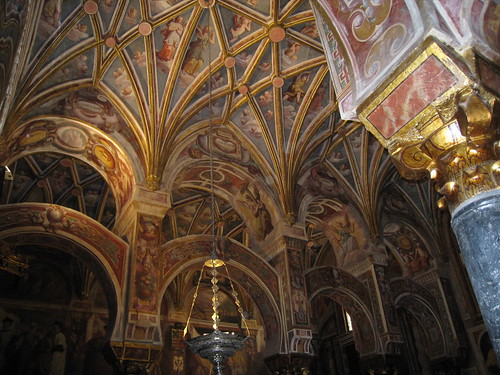
Locus Iste, de Anton Bruckner (1824-1896).
| Locus iste a Deo factus est, inaestimabile sacramentum, irreprehensibilis est. | Este lugar foi feito por Deus, um inestimável sacramento, obra irrepreensível. |
Subscrever:
Mensagens (Atom)